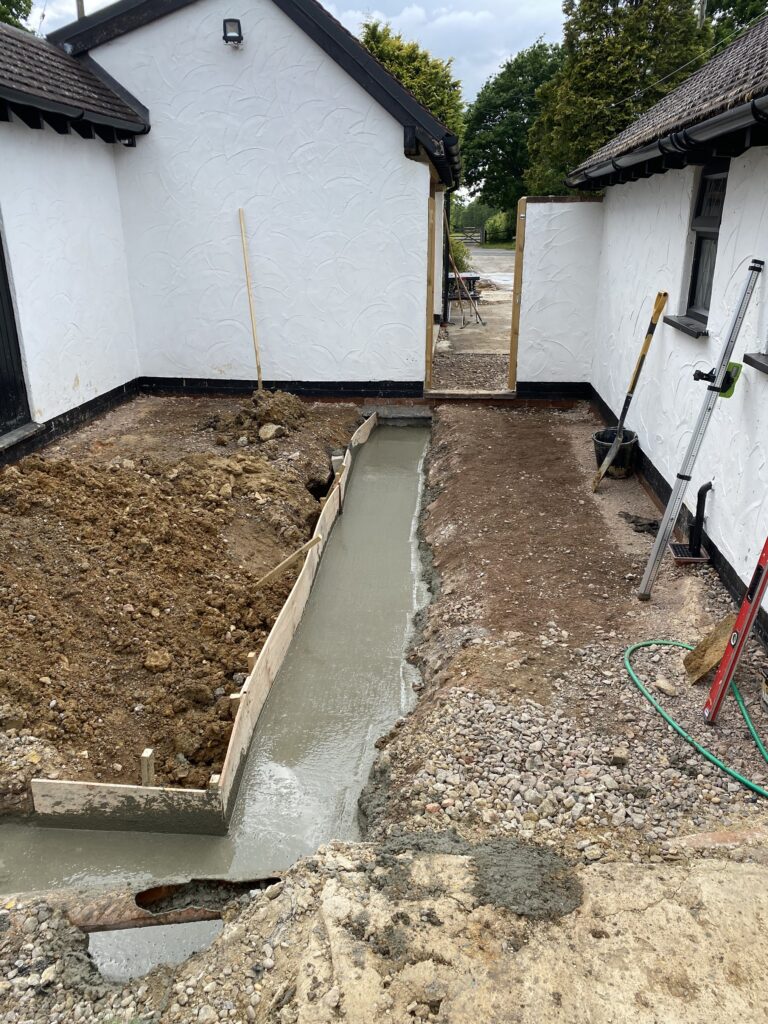
Concrete is widely used because of its strength and durability, but only when it’s handled correctly. Mistakes at any stage, from preparation to curing, can lead to costly repairs or even complete failure. Understanding these common pitfalls is the first step to avoiding them.
Inadequate site preparation
One of the most frequent issues is poor preparation before the concrete is poured. This can include:
- Uneven or poorly compacted sub-base
- Lack of proper formwork
- Inadequate drainage planning
These issues often result in:
- Cracking
- Sinking or movement
- Reduced load-bearing capacity
How professionals avoid it:
They ensure the ground is properly excavated, compacted, and level, with appropriate sub-base materials and drainage systems in place.
DIY pitfalls and lack of expertise
While small projects may seem manageable, concrete work is less forgiving than it appears.
DIY attempts often lead to:
- Incorrect mix ratios
- Uneven pouring and finishing
- Poor timing and coordination
Even minor errors can affect the final strength and appearance.
Using the wrong concrete mix
Different applications require different concrete specifications. Using a generic or incorrect mix can lead to:
- Insufficient strength for structural applications
- Poor resistance to weather or wear
- Premature deterioration
How to avoid it:
Always match the mix to the job. For example, concrete for a driveway, foundations or structural slabs will all have different requirements.
Weather related errors
Concrete is highly sensitive to environmental conditions. Common weather-related mistakes include:
- Pouring in heavy rain without protection
- Working in high temperatures without adjusting curing methods
- Ignoring cold weather precautions
These can result in weak surfaces, cracking, or delayed setting.
Professional approach:
- Adjusting mix designs
- Using protective coverings
- Scheduling pours at optimal times
Poor timing and coordination
Concrete work requires precise timing. Problems arise when:
- Deliveries are delayed
- Labour isn’t ready when concrete arrives
- Finishing takes too long
This can lead to cold joints, uneven finishes, and weakened structures.
How to avoid it:
Plan every stage in advance, ensuring that materials, labour and equipment are fully coordinated.
Incorrect or insufficient curing
Curing is one of the most overlooked aspects of concrete work, yet it’s essential for strength development.
Common mistakes include:
- Allowing concrete to dry too quickly
- Failing to maintain adequate moisture
- Ending curing too early
Professional approach:
Proper curing methods may include:
- Water curing
- Covering with plastic sheeting
- Applying curing compounds
These help retain moisture and ensure the concrete reaches its full strength.
The cost of getting it wrong
Concrete mistakes are rarely easy or cheap to fix. They can lead to:
- Structural issues
- Aesthetic problems
- Increased maintenance costs
- Full replacement in severe cases
Most concrete problems stem from a lack of planning, knowledge, or attention to detail. By understanding these common mistakes – and how professionals avoid them – you can significantly improve the quality and durability of your project.
In many cases, investing in experienced suppliers and contractors is the most cost-effective decision in the long run.
Got a concrete project to discuss, get in touch today.
Check out our 5 star rating in Google and our testimonials on our website that show the high level of service we pride ourselves on, as the leading ready mix concrete supplier in Sussex.